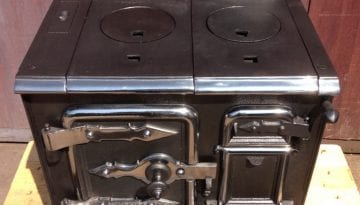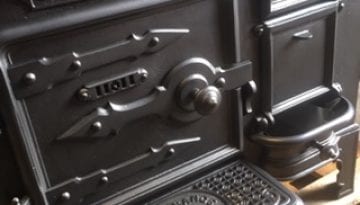
We finished the restoration of a nice little Larbert Portable Range this week. When it arrived it was in an absolute mess and has been fully rebuilt including stainless steel oven and ashpan, several new castings, new fire stones and a fully ‘black lead’ polished finish. It is now back at its home in London and will be earning its keep again once more this winter.
Category: Dobbie Forbes & Co Ltd
Information about Dobbie Forbes & Co Ltd Iron founders
-
New workshop
Well we have finally begun the move to the new (much larger) workshop so thank you to all those who have been patient during this time. You can expect big changes to the website, services and products over the coming months with some exciting new developments like the manufacture of very high quality replica ‘Nipper’ stoves, ‘Hostess’ ranges and authentic Larbert and Guidwife ‘Back cabin stoves’!
I will post with more details on this as time goes on.
All the best.
Olly
-
Historic fiddle rails for back cabin stoves
I am often asked to provide ‘Back cabin stoves’ for the historic narrow boats. These were commonly ‘marinised’ portable cooking ranges typically 20″-24″ in width depending on wether or not they were used in a ‘Butty’ or ‘Motor’ boat. Although the ranges of this size are very rare they do come up and I try to keep at least a couple in stock.
However the most prominent and unique feature to the ranges used in the back cabin was the highly polished brass fiddle rail and standards. Finding original sets is practically impossible and in fact very few actual exist even on original ranges.
I am pleased to say that I have produced a set of patterns for the rail and standards taken directly from an original set. These standards and rail will be cast in Somerset in brass to the exact design and dimensions as the original ones used on working boats throughout the Uk.
They will be available as part of my restorations only and not as a seperate set.
Below is a picture of an original set as reference.

-
At the foundry
For those that get the opportunity to visit a working foundry its an incredible experience. Iron begins to melt at 1200 degrees centigrade so you can imagine the heat radiating from the furnace! I took my camera along last time I was visiting so share a little of the process involved.
In the first pic the two halves of the sand ‘moulds’ are being assembled while some ‘cores’ in the foreground have been lit up and painting to dry them out. After that the crucible it taken from the fire with its 80Kg load of molten iron and poured into the moulds.
After that its a matter of waiting for the iron to cool before its removed from the moulds. The last picture shows the results of the labour sat on my bench before fettling. -
Larbert found in Coastguard’s cottage, Minehead
I had a call last year from a chap who was very excited having found a Larbert Portable range behind a 1980s kitchen that he was removing from a property. Since it was local to me I popped down that night to have a look. We agreed to remove the range and the remains of the slate surround, restore it and reinstall it exactly how it was. I will be writing an article on this restoration in the near future but before that here are a few pictures of the the opening after the range was removed and after it had been put back again.
For those that have tried to move one of these “Portable ranges”, here is my secret weapon;
-
Larbert with boiler in its new home!
Well the Larbert with boiler sold and is in its new home and its looking grand sat against the blue tiles.
I had an email today with this picture attached showing breakfast simmering on the hob. That night the range cooked Guinea Fowl for dinner and the kettle was bubbling away all day. Now that’s what I like to hear!