
Category: Coalbrookdale Company

The name Coalbrookdale is world famous as the birth place of the industrial revolution. It was here is 1709 that Abraham Darby first smelted iron with coke and so created the first truly industrialized industry that would kick start Britian’s path to the first industrial power house of the world.

The Coalbrookdale Company’s foundry at ythe original site of Coalbrookdale operated from 1708 until 2017 when it was sadly sold off as part of a take over bid for AGA/ Rayburn that had been manufactured on the site since the 1940s. The site is scheduled for development and with it the bell tolls for the most important site in the world for the British iron industry and the history of all world industry.

Coalbrookdale manufactured a huge variety of products over the 300+ years they were in operation from the iron plate used for the SS Great Britain to the iron of the worlds first iron bridge of 1779 that still elegantly spans the Severn.
  • Grate restoration at Hinton House

    Grate restoration at Hinton House

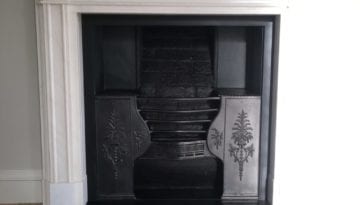
    We completed the restoration and installation of the huge Gold Medal Eagle Range at Hinton House a while ago now but we were asked back to site to attend to the multitude of grates in the bedrooms and living spaces of the manor.  Below are a few of the nicer examples we restored for the client including a lovely circa 1800 Coalbrookdale forest pattern hob grate, a regency engraved and polish steel trim and a collection of matching late 19th century register grates.


  • Abraham Darby’s kitchen grate

    Abraham Darby’s kitchen grate

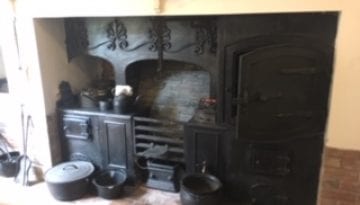
    I was up at Coalbrookdale again recently to see some of the sites that I didn’t have time for on my last visit.  First on the list was the Darby houses.  Abraham Darby I’s house wasn’t open to due to a lack of volunteers but his sons house was.  In the kitchen was this fantastic perpetual oven, roasting grate and hotplate.

  • A quick Coalbrookdale resto

    I was up in the Evesham area recently to tidy up a Coalbrookdale range installed in a 17th century cottage. The owner could remember her mum cooking on it up until the 1970’s. With the planned work to the chimney it will be ready to work again.
    The firebox cheeks were replaced with firestone to protect the existing iron work. The oven will not practically be used so we decided it better to preserve the range in this way rather than exposed the already damaged oven to more abuse. The brick flue was renewed and the hood was removed. After several hours of cleaning it was polished and came up a treat.

  • Another range complete

    Here’s another range complete. I have taken care of the restoration of the ironwork whilst the builders have been hard at work on the surround and brickwork. This range required a completely new top plate, hot plates, damper etc. The top plate proved to be a very tricky casting to produce due to its size but it came out very nicely and is now fit for service again.

  • Well it’s been a really busy few weeks here. We’ve been up and down the country working, buying and selling and I’m now back at the workshop to catch up with the on going work here.
    I went to take a look at two Shepherds huts yesterday with a mind to restoring them for the owner of the estate where they still are. One is in reasonable nick but the other is a real project.
    The Ideal Domestic boiler is off up to London for its new life on a boat on the Thames. I’ve been busy making a log store/ base for it to stand on which should look very smart and raise boiler to a more convenient height for cooking etc.
    I’ve got three new acquisitions this week alone. Firstly a very nice Coalbrookdale open range that I just couldn’t pass up. Sadly I can’t make out the digits on the RD mark but I suspect it is circa 1860 and certainly no later than 1868.
    Next is a Larbert portable range, this is probably the most desirable of the portable ranges and they don’t come up very often. It’s in reasonable nick but will certainly take more than a bit of work to get it up to scratch again!
    Lastly is a very nice early open range. This type of range predate any dating marks so it is hard to know when they were cast. The earliest example that I have restored was in Bristol and dated from 1813. This one is likely to be a bit later but is almost certainly pre 1840s.

  • Late 18th Century Hobgrate

    I met an interested bloke last week who was closing up shop after 100 years of business. I had originally met him to buy some tools but saw this hobgrate while I was there. It came from a nearby cottage that was demolished nearly 80 years ago and he’d had in since. It can now been seen in my shop fully restored.

  • Coalbrookdale hob register grate 1843

    Here we have the grate from a pervious post having just got back from the blasters. The sheer amount of different cast parts on these early greats is amazing, often there are wrought bars and lugs and various rivets and square nuts holding it all together. I sometimes think it’s a shame that once the grate is installed you don’t get to see all the gubbins!

  • Newly aquired

    Here’s a few bits and bobs being loaded up to take the blasters this afternoon. The register grate is cast by the Coalbrookdale company and is dated 27th May 1843. That is just one year after manufactured products had begun to be recorded by a standardised marking. It’s a lovely grate with deep releif castings.

    The other item is a boiler by “Ideal Domestic”. In its former life it single handedly heated a three story Victorian furniture shop in mid Wales. Both these items will be restored and up for sale in the next few months.